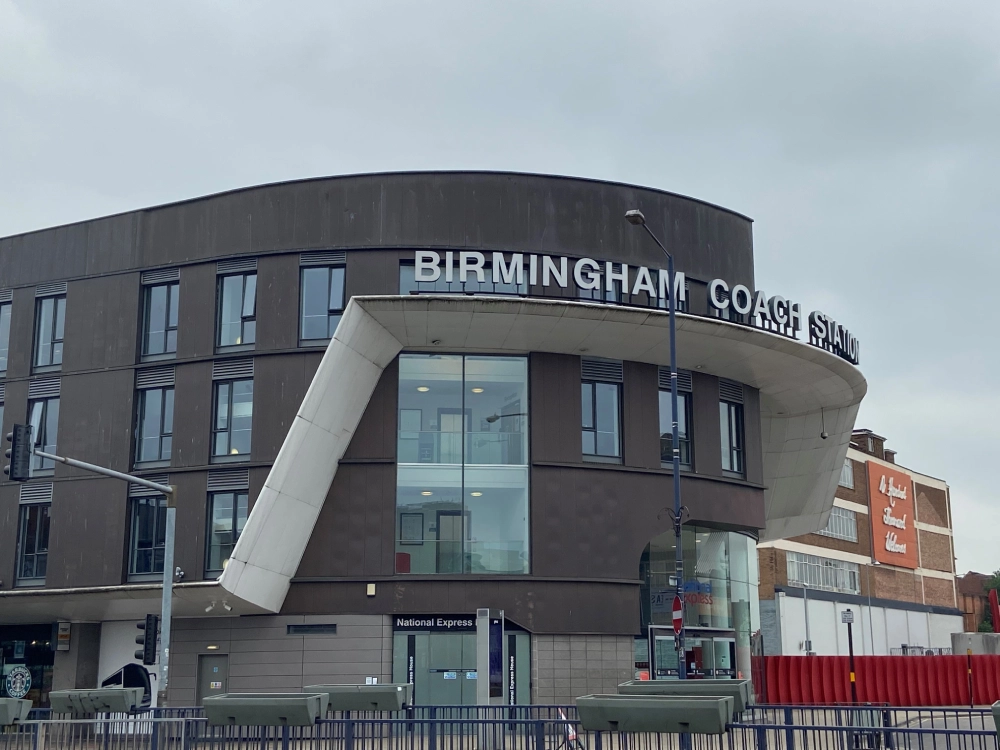
Birmingham is the United Kingdom's second city, and the gap between that fact and how little international students think about it is exactly where its value sits. It is a large, young, working city in the middle of England — not a postcard town that empties in winter, and not London. For a language student that combination produces a specific and underrated set of advantages.
The first is cost. Birmingham is a major city with major-city infrastructure, but it is not priced like the capital. Rent, transport, eating out and everyday spending all sit well below London levels, which in practice means a given budget buys more weeks of study. For anyone whose stay is limited by money rather than time, this is the single most important thing about the city.
The second is that Birmingham is genuinely central. It is the pivot of the British rail network, and that is not a figure of speech — you can reach London, Manchester, Liverpool, Bristol, Oxford, Cardiff and the Lake District on direct services. Students here tend to travel far more at weekends than students based in a coastal town, simply because the trains make it easy.
The third is the city's demographics. Birmingham is one of the youngest cities in Europe by median age and hosts several large universities, so the population you meet is disproportionately students and young professionals. That matters more than it sounds. The practical difficulty of learning English abroad is not finding lessons; it is finding people your own age who will talk to you unhurriedly, and a university city solves that problem structurally.
The city itself has been rebuilt around its centre over the last two decades. The canal network — Birmingham famously has a great deal of it — has been turned from industrial infrastructure into the spine of the central area, with bars and restaurants along the towpaths at Brindleyplace and Gas Street Basin. The Bullring and Grand Central give the city a serious shopping centre; the Jewellery Quarter, still a working trade district, is the most characterful part of the city and the best place to spend an afternoon that isn't about spending money.
Birmingham's food is the thing residents will bring up first. The city's South Asian communities have produced a restaurant culture that is not a novelty here but the mainstream, and the Balti Triangle is its best-known expression. For Muslim students this has a straightforward practical consequence: halal food is ordinary rather than a search, and mosques are numerous and central.
Studying here. Topstudy works with English Path Birmingham, offering General English and Semi-Intensive English. General English is the standard programme across the four skills. Semi-Intensive sits between a general course and a full intensive load — more hours than a standard week without filling the entire day, which is the usual choice for students who want to study seriously and still have time to use the city.
Accommodation. Host families, student residences and shared flats are all available. Birmingham's size means location is worth thinking about in a way it is not in a small town: the city centre is compact and walkable, but the residential areas spread well beyond it. Ask where your accommodation sits relative to the school before you accept it.
Weather, honestly. It rains, it is grey for a large part of the academic year, and summers are mild rather than hot. Anyone choosing a British city should decide in advance that this is acceptable. What the climate does do is keep the city's life indoors and social — cafés, pubs, galleries and music venues rather than beaches — which is arguably better for language practice than a summer spent on the sand.
Who it is for. Students on a defined budget who want a real city rather than a resort; anyone who intends to travel around Britain during their stay; and students who want to be surrounded by people their own age rather than by other language students.
Get a Quote Now