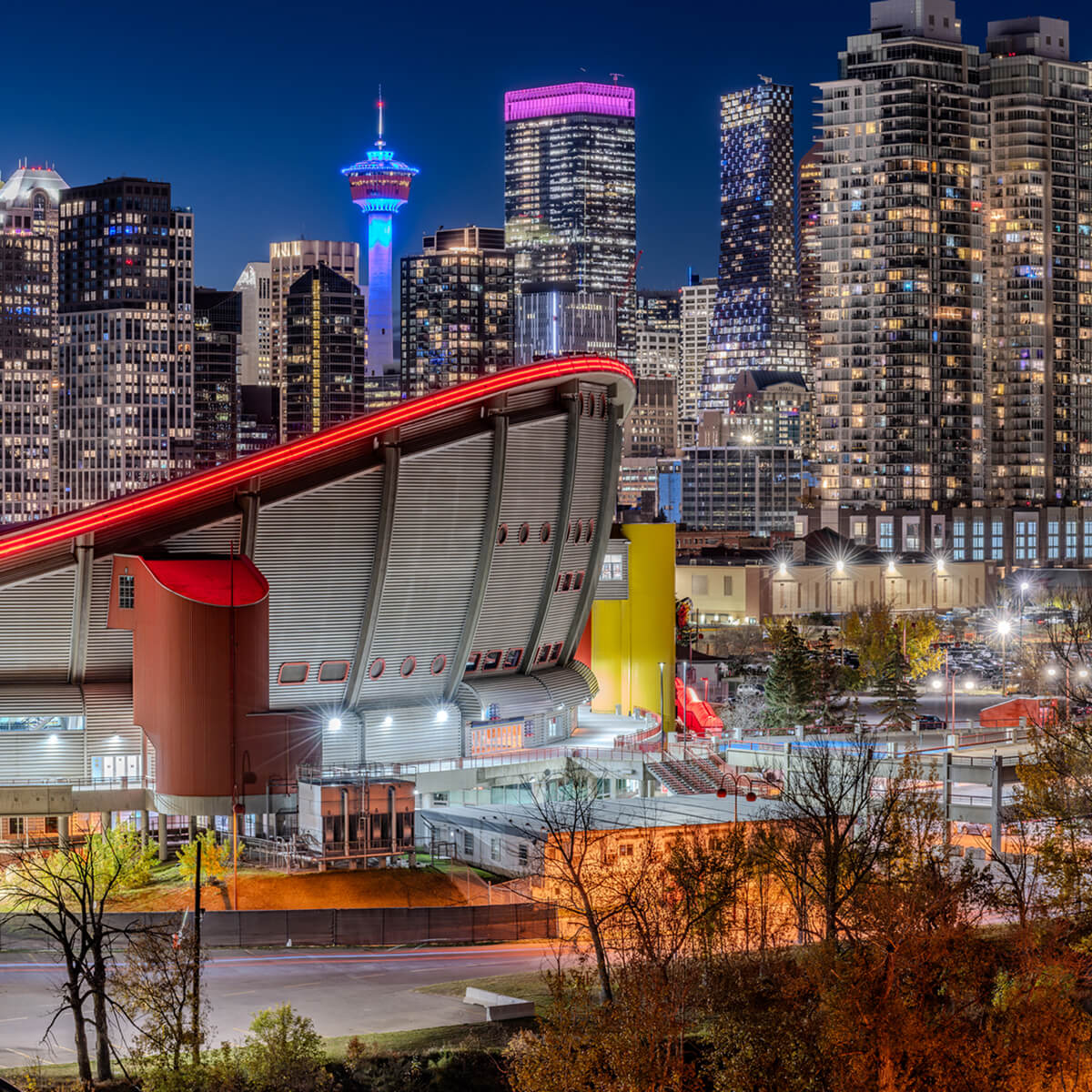

Calgary sits on the western edge of the Canadian prairies, at the point where flat grassland gives way to the foothills of the Rocky Mountains. Its geography is the first thing to understand about it, because almost everything else follows from that position: a modern, business-oriented city with the mountains an hour's drive away.
The city itself is young, planned and clean, built around a compact downtown of glass towers. It is not a historic European-style centre and does not pretend to be. What it offers instead is a high standard of everyday living — reliable public services, safe streets, a functioning transit system and an unusual amount of public green space along the Bow and Elbow rivers, which meet in the middle of the city and are followed by one of North America's longest urban pathway networks.
Two features of Calgary are genuinely distinctive for a student. The first is the +15 Skyway: an elevated network of enclosed walkways connecting downtown buildings roughly fifteen feet above street level. It exists because of winter, and it means the coldest part of the year does not stop you moving around the centre. The second is the Chinook — a warm wind off the mountains that can lift winter temperatures dramatically within hours. Calgary's climate is genuinely cold in winter, and no honest description should soften that, but it is also very dry and very sunny, which most people find far more tolerable than damp cold.
The Rockies are the reason many students choose this city over a larger Canadian one. Banff and Canmore are day trips; Lake Louise and the national parks are weekend distance. Skiing and snowboarding in winter and hiking in summer are not aspirational activities requiring a special trip — they are what people here do on a normal weekend. For a student, that turns the whole stay into something more than a course.
Calgary is also a working city rather than a tourist one, which has a direct effect on language practice. The people you speak to are at their jobs and living their lives, not serving a seasonal visitor economy. Conversations are ordinary, and ordinary is what you need. The Calgary Stampede in July is the one week the city turns itself over to visitors, and it is worth timing a stay around if the rodeo and the city-wide festival appeal to you.
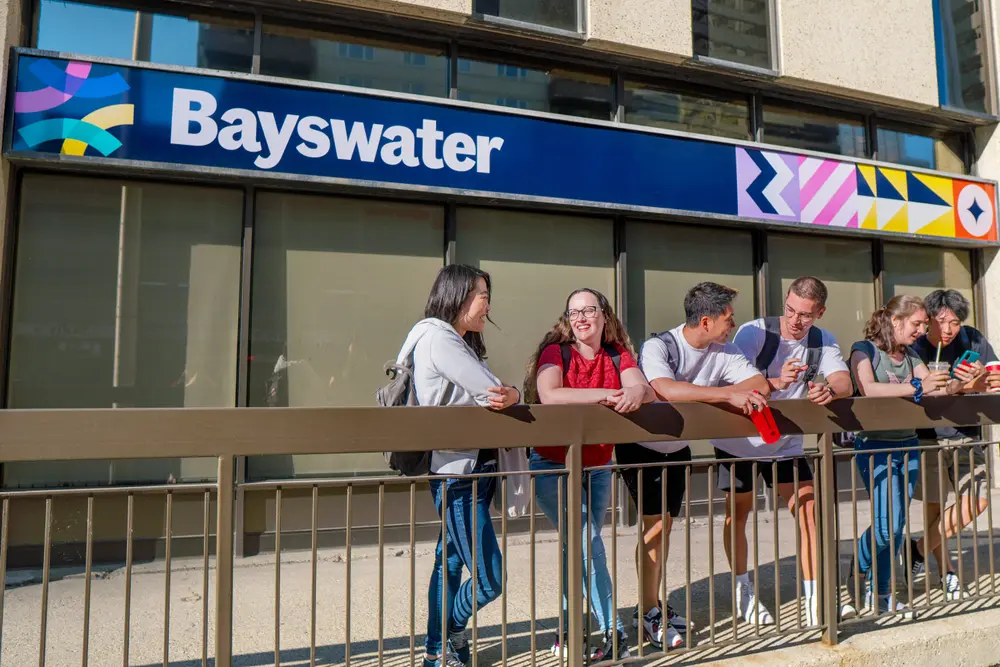
Studying here. Topstudy works with Bayswater Calgary, offering General English, Semi-Intensive English and Intensive English — the fullest range of the cities in this group. General English is the standard route. Semi-Intensive adds hours without filling the day. Intensive is for students working to a fixed deadline. Having all three available means you can match the load to your actual timeline rather than the other way round.
Accommodation. Host families, residences and shared apartments are available. Calgary is a spread-out North American city, so proximity to a C-Train station matters more than raw distance — the light rail is the spine of the transit system and it is what makes living outside the centre practical. Ask which line and which station before accepting an offer.
Who it is for. Students who want the outdoors to be part of the experience rather than a postcard; anyone who prefers a clean, safe, well-run city to a historic or chaotic one; and students who can accept a real winter in exchange for sunshine, dry air and the Rocky Mountains on the doorstep.
Get a Quote Now